Overview of the Commonwealth Seniors Health Care Card (CSHC)
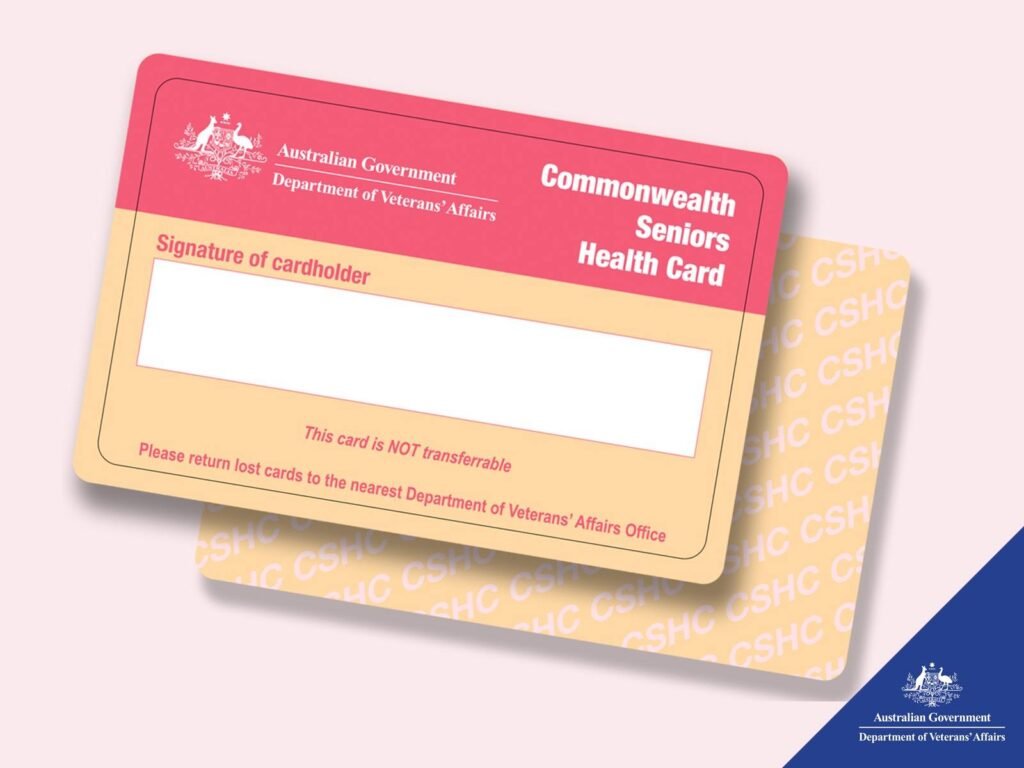
The Commonwealth Seniors Health Care Card is an Australian Government concession card designed specifically for self-funded retirees who have reached Age Pension age but do not receive an income support payment like the Age Pension or Disability Support Pension. If you’ve worked hard, saved diligently, and built your own retirement nest egg, this card helps you access cheaper medicines and a range of cost of living concessions—even if your assets disqualify you from the pension.
In 2025–2026, the CSHC remains one of the most important entitlements for older Australians managing retirement expenses. It provides access to concessional PBS prescriptions, potential bulk-billed GP visits, and state-based discounts on electricity, rates, and transport. Understanding whether you meet the eligibility requirements—and how to structure your income to stay under the thresholds—can mean thousands of dollars in savings each year. Money Path can help you understand your eligibility, model different income strategies, and navigate the application process with confidence.
The information in this article reflects current rules as at late 2025 and early 2026. Income thresholds and concession details are indexed and updated regularly, so you should always check the Services Australia or Department of Veterans’ Affairs (DVA) websites for the latest figures before you apply.

Who can get the Commonwealth Seniors Health Care Card?
The Commonwealth Seniors Health Care Card is not available to everyone. You must meet specific age, residency, and income requirements set by the Australian Government. Here’s what you need to know about eligibility in plain terms.
To be eligible for the Commonwealth Seniors Health Care Card, you must:
Have reached Age Pension age – Currently 67 for people born on or after 1 January 1957. If you were born earlier, transitional ages between 65.5 and 66.5 may apply, but most new applicants now must be at least 67.
Be an Australian resident – You must live in Australia and be physically present in the country on the day you claim. You also need to be an Australian citizen, permanent visa holder, or hold an eligible Special Category visa (typically New Zealand citizens).
Not be receiving an income support payment – If you’re already receiving the Age Pension, Disability Support Pension, Carer Payment, Service Pension, or similar Centrelink payments, you likely already have a Pensioner Concession Card and cannot hold the CSHC as well.
Meet the CSHC income test – Your adjusted taxable income (plus deemed income from certain account-based pensions) must fall below the published income limits. As at late 2025, these thresholds are approximately $101,105 per year for singles and $161,768 combined for couples. Check Services Australia for current figures.
There is no assets test for the Commonwealth Seniors Health Care Card. This is important for self-funded retirees who may have significant superannuation balances or investment properties but relatively modest income. However, your investment income still counts toward the income test.
If you have dependent children in your care, or have recently separated from a partner who receives a relevant payment, you may qualify for higher income thresholds. Veterans and their partners may also apply for the CSHC through DVA under similar eligibility rules—contact DVA or Services Australia to understand which pathway suits your circumstances.
How the CSHC income test works
The Commonwealth Seniors Health Care Card income test is based on adjusted taxable income plus deemed income from certain superannuation income streams, not on assets directly. This means the value of your home or super balance isn’t tested—but the income generated from investments and super definitely is.
What counts as income for CSHC purposes?
The income test includes:
Taxable income from your tax return, including employment, self-employment, and business income
Account-based pension income and superannuation income streams (if purchased or changed after 1 January 2015, deeming rules may apply)
Net rental income from investment properties
Investment dividends, interest, and managed fund distributions
Foreign pensions and income, converted to Australian dollars
Reportable fringe benefits and reportable superannuation contributions
What generally does not count?
The family home is not tested because there’s no assets test. Some tax-free components of super may not be counted directly, but the overall taxable and deemed income from your retirement income streams can still affect your eligibility.
The income limits for the Commonwealth Seniors Health Care Card are indexed regularly. For 2025–2026, the thresholds are significantly higher than they were a few years ago, meaning more self-funded retirees now qualify. Always check the current limits on Services Australia before you apply or assume you’re ineligible.
Estimating and proving your income for the CSHC
Accurate income estimates are critical for a successful CSHC application. If your declared income is too high, you won’t qualify. If you underestimate and your income later exceeds the threshold, your card could be cancelled or you may face a review.
When you apply, you’ll typically need to provide:
Document | Purpose |
|---|---|
ATO Notice of Assessment | Verifies your taxable income for the most recent financial year |
Superannuation and pension statements | Shows account-based pension balances and income drawn |
Investment records | Details of shares, managed funds, term deposits, and rental properties |
Partner’s documents | If applicable, the same information for your spouse or partner |
You’ll usually need to submit your ATO Notice of Assessment within a specified timeframe after lodging your claim. Failure to provide this document may delay or affect your application outcome.
If your income fluctuates—for example, because you’re drawing variable pension payments or planning to sell investments—keep records of your income projections for the remainder of the financial year. Centrelink or DVA may ask you to update your estimate, and providing this information promptly helps ensure your eligibility is assessed correctly.
Professional advice from a retirement planner can help you structure your income to meet CSHC thresholds without compromising your lifestyle. This is one of the ways Money Path can assist clients dealing with complex retirement income scenarios.
Health benefits of the Commonwealth Seniors Health Care Card
The primary purpose of the Commonwealth Seniors Health Care Card is to provide cheaper health care for seniors who are not receiving the Age Pension. If you’re managing health conditions in retirement, these benefits can make a significant difference to your annual expenses.
Key health benefits include:
Cheaper prescription medicines – CSHC holders pay the concessional co-payment rate under the Pharmaceutical Benefits Scheme (PBS), which is substantially lower than the general rate. For seniors taking multiple medications for chronic conditions, this can save hundreds or even thousands of dollars per year.
Potential for bulk-billed GP visits – Doctors receive higher Medicare benefits when they bulk bill concession card holders. While bulk billing is at each practice’s discretion, many GPs choose to offer free consultations to CSHC holders.
Medicare Safety Net protection – Once you reach a certain annual threshold for out-of-hospital medical costs, Medicare provides higher rebates for the rest of the year. CSHC holders may access lower thresholds, reducing out-of-pocket expenses faster.
Discounts on specialist visits, pathology, and imaging – Some providers recognise the CSHC and offer reduced fees or bulk billing for diagnostic services.
It’s important to understand that bulk billing is not guaranteed. Individual medical practices decide their own billing policies, so you should always ask when booking an appointment.
For seniors managing chronic conditions like diabetes, heart disease, or arthritis, these health care savings can significantly reduce annual retirement expenses and help maintain independence at home for longer.

Other living cost concessions linked to the CSHC
Many concessions attached to the Commonwealth Seniors Health Care Card depend on state, territory, and local government policies—not the federal government. This means the discounts you can access vary depending on where you live and which providers you use.
Types of concessions that may be available:
Energy and utility bill concessions – Discounts on electricity, gas, and sometimes water and sewerage bills
Cost of Living Concessions – Lump-sum or quarterly payments in some states to help with general household expenses
Council rate reductions – Some local councils offer discounted rates for CSHC holders
Motor vehicle registration discounts – Reduced registration fees for seniors in certain jurisdictions
Emergency services levy reductions – Support with emergency services charges for owner-occupied homes in some states
Public transport concessions – Off-peak and seniors travel discounts on buses, trains, and ferries
Specific programs include energy concessions, medical heating and cooling assistance, residential parks schemes, and funeral assistance in various states—though the names and amounts differ by jurisdiction.
Concession amounts, income thresholds, and eligibility rules for each scheme are set by each state or territory government, and they can change without notice. The best way to find out exactly what you can access is to use your state or territory concession finder tool or contact your local council.
How to apply for the Commonwealth Seniors Health Care Card
There are two main application pathways: through Services Australia (Centrelink) for most people, and through the Department of Veterans’ Affairs (DVA) for eligible veterans and their partners.
General application steps:
Check your eligibility – Confirm that you meet the age, residency, and income requirements for the Commonwealth Seniors Health Care Card.
Gather your documents – You’ll need identity documents (passport, driver’s licence, Medicare card), your Tax File Number, your ATO Notice of Assessment, superannuation and investment statements, and your partner’s details if applicable.
Start your application – Create or log in to your myGov account and link it to Centrelink to begin the online CSHC claim. If you prefer paper forms or need assistance, you can request a form by phone or visit a service centre.
For veterans – Contact DVA or log in to MyService to request and lodge a CSHC claim through the veterans’ pathway.
Couples must include partner details and obtain partner consent as part of the application. This consent can generally be provided in writing, online, or by phone, depending on the agency’s process.
After lodging, Centrelink or DVA may request further information or clarification on your income. Responding to these requests in a timely manner helps avoid delays.

Using and maintaining your Commonwealth Seniors Health Care Card
Once your application is approved, you’ll receive a physical card in the mail and can begin using it immediately for health and concession benefits.
How to use your card:
At pharmacies – Present your card when filling PBS prescriptions to receive the concessional co-payment rate.
At medical centres – Show your card and ask whether the practice offers bulk billing or discounts for CSHC holders.
For state concessions – Provide your card details when applying for eligible state and territory concessions on utilities, rates, and transport.
Ongoing obligations:
You must notify Centrelink or DVA promptly if any of the following changes occur:
Your income increases or decreases significantly
You start or stop an account-based pension
Your relationship status changes (marriage, separation, new partner, or partner’s death)
You move to a new address—especially if you leave Australia or move interstate
Your dependent care arrangements change
Your CSHC may be reviewed regularly, especially after updated ATO assessments are issued or if there’s a significant change in your income.
The card remains valid while you continue to meet eligibility requirements. Some cards are automatically renewed, but you may need to confirm your details periodically. Keep your contact details updated so you receive letters about renewals, reviews, or policy changes on time.
Commonwealth Seniors Health Care Card vs Age Pension and Pensioner Concession Card
Understanding where the CSHC fits within Australia’s retirement income and concession system helps you plan your finances more effectively.
Feature | Age Pension + Pensioner Concession Card | Commonwealth Seniors Health Card |
|---|---|---|
Income support payment | Yes (fortnightly payment) | No |
Income test | Yes | Yes |
Assets test | Yes | No |
PBS concessions | Yes | Yes |
Medicare Safety Net | Yes | Yes |
State concessions | Usually broader | Varies by state |
Target group | Lower income/asset seniors | Self-funded retirees |
The Age Pension is a fortnightly income support payment for eligible seniors, subject to both income and assets tests. It automatically comes with a Pensioner Concession Card (PCC), which typically provides a broader range of state concessions—particularly on utilities and transport.
The Commonwealth Seniors Health Care Card is designed for seniors who have reached Age Pension age but whose income or assets are too high for the Age Pension. It provides many of the same health-related concessions (PBS, Medicare Safety Net) without an income payment attached.
Some seniors may qualify for a part Age Pension and a PCC while still working part-time or drawing super. The interaction between these entitlements is complex, and financial planning strategies can help you maximise your benefits at each stage of retirement.
How Money Path can help with the Commonwealth Seniors Health Care Card
Money Path specialises in helping pre-retirees and retirees understand and maximise government entitlements, including the Commonwealth Seniors Health Care Card and Age Pension where applicable.
Specific ways Money Path can assist:
Eligibility assessment – Determine whether you meet current CSHC eligibility rules based on your age, residency, and projected retirement income
Income modelling – Test different retirement income strategies to stay under CSHC income thresholds while maintaining your lifestyle—for example, how much to draw from super, how to structure account-based pensions, or when to realise capital gains
Understanding entitlement interactions – Learn how the CSHC, Age Pension, and other Centrelink payments work together as you move from work to semi-retirement and full retirement
Documentation guidance – Get help gathering and interpreting the documents required for your application, including ATO Notices of Assessment and investment income figures
Money Path can also:
Review state concessions – Identify which state and territory concessions you may access with your Commonwealth Seniors Health Care Card based on where you live
Integrate retirement planning – Coordinate advice across tax, superannuation, and estate planning so that concessions and seniors health benefits are fully integrated into your long-term plan
If you’re unsure whether you qualify, or you want to structure your income more effectively to maximise your entitlements, getting professional advice now can reduce stress and help you avoid costly mistakes when dealing with Centrelink or DVA.
Get in touch with Money Path for a personalised retirement and entitlement review.

Key points to remember about the Commonwealth Seniors Health Care Card
The Commonwealth Seniors Health Card is for Australians at Age Pension age who do not receive a pension but meet the income test.
It delivers substantial health benefits such as cheaper PBS medicines, potential bulk-billed GP visits, and improved Medicare Safety Net protection.
Additional concessions on electricity, rates, transport, and other costs may be available depending on your state or territory and local providers.
There is no assets test, but income thresholds apply and are reviewed regularly.
Accurate income estimates and up-to-date ATO assessments are essential for eligibility and ongoing entitlement.
Professional advice from Money Path can help you structure your income, complete your application, and make the most of your Commonwealth Seniors Health Card.
If you haven’t checked your eligibility recently, now is a good time to read the latest information on the Services Australia website and contact Money Path to ensure you’re not missing out on benefits you’ve earned.